

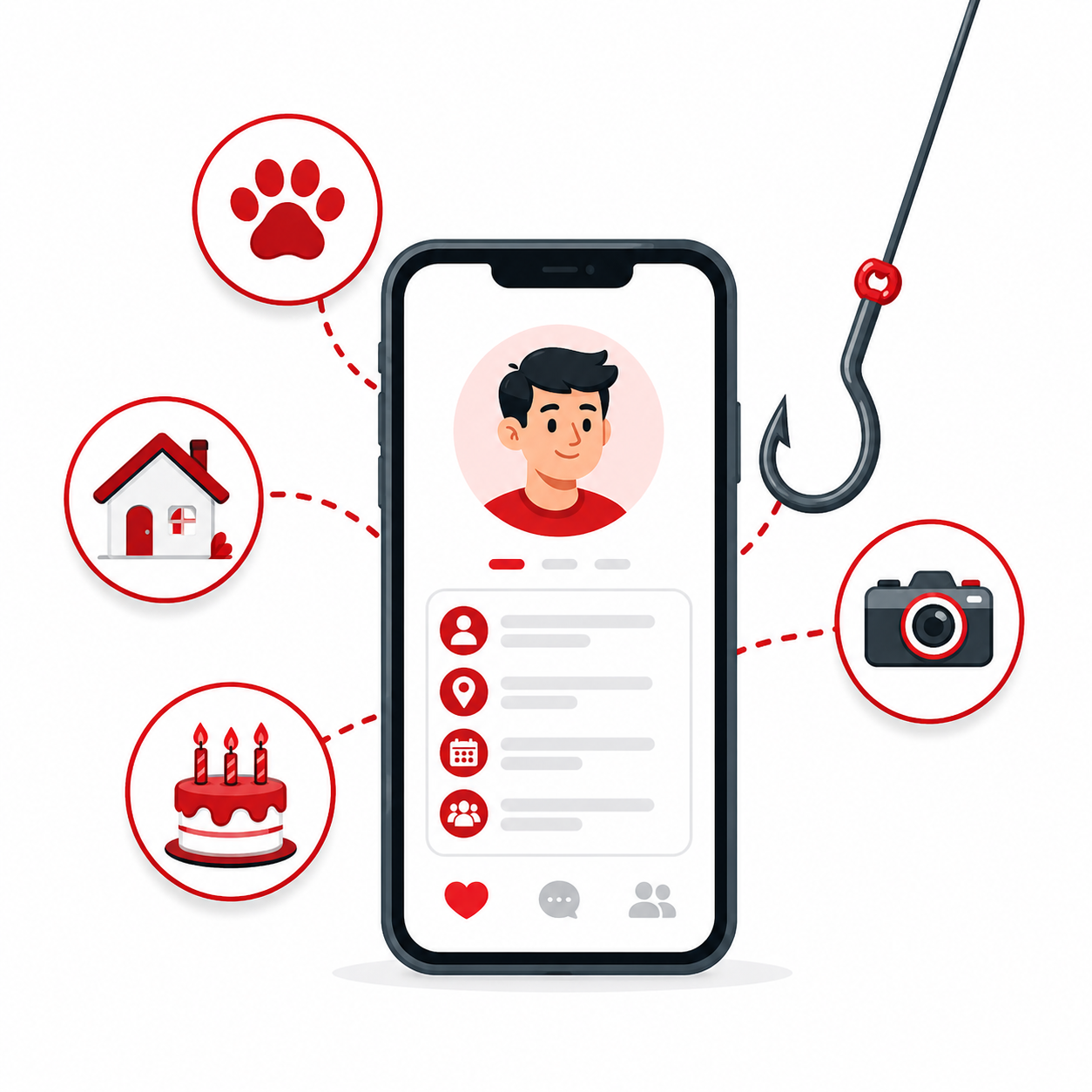
Social engineering is BIG business. In simple terms, it means cybercriminals learn who you are, gather personal details about you, and use that information to trick you, access your accounts, or make money.
The scary part? We often give them the clues ourselves.
Think about what people post publicly on Facebook, Instagram, LinkedIn, and other social platforms: maiden names, favorite pets, high schools, hometowns, first cars, kids’ names, birthdays, and vacation photos. A fun “Throwback Thursday” post may seem harmless, but to a social engineer, it can be a treasure map.
Many of those details are also common password reset or identity verification questions. Maiden name? Check. Favorite pet? Check. Town you grew up in? Check. First car? Check. Suddenly, that cute post about your childhood dog is not so innocent.
According to the Federal Trade Commission, scams that started on social media led to billions of dollars in reported losses. Scammers use what they find online to make their messages feel personal, believable, and urgent.
How can you protect yourself?
Be careful about what you share publicly. Before posting personal details, ask yourself, “Could this answer a security question?”
Also, when websites require identity challenge questions, consider using false but memorable answers. Your first car does not have to be your actual first car. It could be “purple giraffe.” Just keep those answers stored securely, ideally in a password manager. If you keep a handwritten list, store it safely offline. You can even take a photo of it, but make sure the photo is stored securely too.
Social media should be fun, not a free research folder for scammers. A little caution can go a long way in keeping your accounts, your business, and your personal information safer.
Need help strengthening your password and identity security? IT Radix is here to help keep your digital breadcrumbs out of the wrong hands.