
Quick Answer: Co-managed IT is a collaborative approach to technology support where a business’s internal IT team works alongside a Managed Service Provider (MSP). The MSP provides additional expertise, resources, monitoring, and support without replacing existing staff. This helps businesses strengthen security, reduce workloads, and support growth while maintaining control over their technology.
Your internal IT person probably wears a lot of hats.
One minute they’re troubleshooting a computer. The next they’re handling a security alert, setting up a new employee, or planning a major technology upgrade.
It’s a lot for one person or even a small team to manage.
But what if you could give your IT team extra support without hiring another full-time employee?
That’s where co-managed IT services come in.
What Is Co-Managed IT?
Think of co-managed IT as adding reinforcements to your existing IT team.
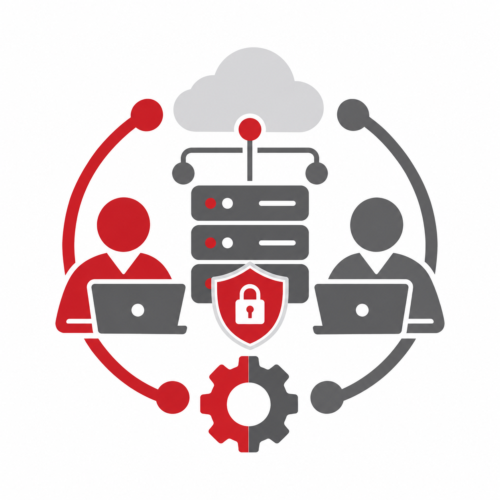
Instead of outsourcing everything, your business partners with an MSP that works alongside your internal staff.
Your team continues managing the areas they know best, while the MSP helps fill gaps, provide specialized expertise, and handle additional responsibilities.
It’s a flexible approach that gives your business more IT resources without giving up control.
How Does Co-Managed IT Work?
With co-managed IT, responsibilities are divided between your internal team and the MSP based on your business needs.
For example, your internal IT person might handle employee support and daily operations, while the MSP manages cybersecurity, network monitoring, and infrastructure maintenance.
Co-managed services can include:
- Help Desk Support: Additional assistance when employees need technical help
- Proactive Monitoring: Watching systems for potential problems before they cause disruptions
- Cybersecurity: Managing security tools, monitoring threats, and strengthening protection
- Cloud Services: Supporting Microsoft 365 and other cloud platforms
- IT Projects: Helping with migrations, upgrades, and technology deployments
- Strategic Planning: Developing technology roadmaps and preparing for future growth
The key is deciding who handles what before problems arise.
Why Do Businesses Choose Co-Managed IT?
Their Internal IT Team Is Stretched Thin
When one person is responsible for everything, important projects and preventive maintenance can get pushed aside.
Co-managed IT gives your team additional resources so they can focus on higher-priority work.
They Need Specialized Expertise
Cybersecurity, cloud computing, and compliance can require knowledge that an internal generalist may not have.
An MSP provides access to specialists without requiring a separate full-time hire for every technical area.
They’re Growing
Adding employees, locations, and applications creates more work for IT.
Co-managed services can help your business scale its technology support as needs change.
They Want Better Coverage
Your IT team needs vacations, sick days, and time away from the office, too.
An MSP can provide additional coverage and help ensure support continues when internal staff aren’t available.
Co-Managed IT vs. Fully Managed IT: What’s the Difference?
| Support Model | How It Works |
|---|---|
| Break-Fix IT | You request assistance when something breaks or needs attention. |
| Fully Managed IT | An MSP takes primary responsibility for ongoing IT support, maintenance, and management. |
| Co-Managed IT | Your internal IT team and MSP share responsibilities based on an agreed-upon support model. |
Co-managed IT is often a good fit for businesses that already have someone managing technology but need additional skills, capacity, or coverage.
What Are the Risks of Co-Managed IT?
Co-managed IT can be extremely effective, but only when everyone understands their responsibilities.
Without clear communication, businesses may experience:
- Overlapping Responsibilities: Two teams working on the same issue without coordinating
- Support Gaps: Each team assuming the other is handling an important task
- Access Confusion: Unclear permissions or administrative responsibilities
- Delayed Responses: Employees not knowing who to contact for help
The solution is establishing clear roles, escalation procedures, communication expectations, and shared visibility from the beginning.
Frequently Asked Questions
Does Co-Managed IT Replace My Internal IT Team?
No. Co-managed IT is designed to support your existing team, not replace it.
Is Co-Managed IT Secure?
It can be. Security depends on clearly defined responsibilities, appropriate access controls, effective monitoring, and coordination between both teams.
Is Co-Managed IT Only for Large Businesses?
No. Small and midsize businesses with an internal IT person or team can benefit from additional expertise and support.
Give Your IT Team the Support It Deserves
Your internal IT staff knows your business, your employees, and your daily operations.
An MSP brings additional resources, specialized expertise, and broader technology support.
Together, they can create a stronger, more flexible IT environment.
At IT Radix, we work alongside internal IT teams to help manage technology, strengthen cybersecurity, and support business growth without unnecessarily adding to their workload.
Because co-managed IT isn’t about replacing your IT team. It’s about helping them do even more.