

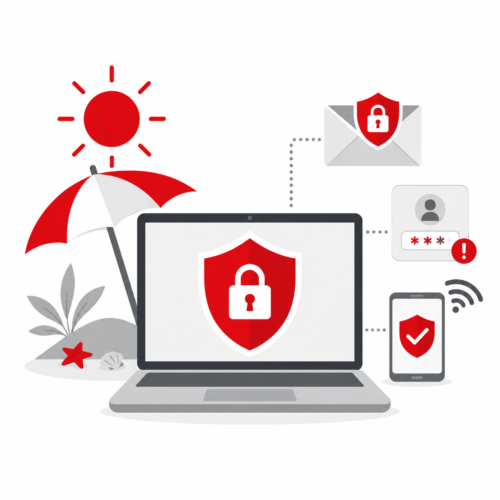
Summer has a way of changing the pace of business.
Employees take well-deserved vacations. Schedules shift. People work from various locations. Team members cover for one another. Decision-makers may be harder to reach. And everyone is trying to keep things moving while also enjoying the season.
Unfortunately, cybercriminals are not out of the office.
Cyber threats do not slow down just because the office calendar does. Phishing emails, fake invoices, credential theft, suspicious login attempts, and other security risks can still happen when your team is distracted, traveling, or covering for someone who is away.
In fact, changes in routine can sometimes make businesses more vulnerable.
That is why summer is a great time to review your cybersecurity protections before the season is in full swing.
Distraction Is a Cybercriminal’s Friend
Most cyberattacks do not start with dramatic flashing warnings or obvious red flags. Many start with a simple email, a fake login page, a convincing invoice, or a message that looks just close enough to be real.
During the summer, employees may be moving quickly. Someone may be checking email between meetings, approving a request while traveling, or filling in for a coworker who usually handles certain tasks. When routines shift, it can be easier to miss small signs that something is wrong.
That is exactly what cybercriminals count on.
A phishing email that might normally raise suspicion may get a quick click when someone is busy. A fake invoice may slip through when the usual approver is away. A suspicious login alert may be ignored if an employee assumes it is related to travel.
Cybersecurity is not just about tools. It is also about awareness, timing, and habits.
Review the Tools Protecting Your Business
Before summer gets busy, it is wise to review the cybersecurity tools your business depends on.
Are your email filters catching suspicious messages?
Is endpoint protection active on employee devices?
Are backups running properly?
Are security alerts being monitored?
Is multi-factor authentication in place for key accounts?
Are remote access tools configured securely?
These are not questions you want to answer for the first time during an emergency.
A quick review now can help identify gaps before they become bigger problems. It can also give your team more confidence that the right protections are in place while people are traveling, working remotely, or taking time off.
Email Security Deserves Extra Attention
Email is still one of the most common ways cybercriminals try to get into a business.
Phishing messages, fake invoices, spoofed sender names, payment change requests, shared document scams, and password reset tricks can all arrive in an inbox looking surprisingly ordinary.
Summer can make these attacks more effective because people may be covering unfamiliar responsibilities. For example, someone who does not normally approve invoices may be asked to help while a coworker is away. An employee may receive a message that appears to come from a manager on vacation asking for something urgent. A vendor request may look legitimate simply because the normal routine is already different.
This is a good time to remind employees to slow down, verify unusual requests, and ask questions before clicking links, opening attachments, or sending sensitive information.
A quick phone call or internal check can prevent a much bigger issue.
Do not Forget Employee Awareness
The best cybersecurity tools are important, but people are still a critical part of your defense.
Employees should know what to watch for, especially during times when routines are changing. A short summer security reminder can go a long way.
Remind your team to be cautious with unexpected attachments, urgent payment requests, password reset emails, unfamiliar login prompts, and messages that pressure them to act quickly.
It is also helpful to remind employees what to do if something seems suspicious. Who should they contact? Should they forward the email? Should they report it through a security tool? Should they call IT Radix?
When employees know the process, they are more likely to act quickly and confidently.
Secure the Devices That Go Along for the Ride
Summer work often means laptops, phones, and tablets are traveling with you.
Before employees take devices on the road, make sure those devices are updated, protected, and approved for business use. Security patches, antivirus or endpoint protection, disk encryption, screen locks, and strong passwords all matter.
A device that is missing updates or protection can create unnecessary risk, especially if it is being used outside the office or connected to unfamiliar networks.
The same applies to personal devices. Employees may be tempted to check email or access files from a personal laptop or family tablet while away. That may feel convenient, but it can expose business data if the device is not properly secured.
Clear guidance helps employees make safer choices.
Make Sure Someone Is Watching the Store
When key people are away, it is important to know who is monitoring cybersecurity alerts, approving access requests, and responding to potential issues.
If a suspicious login attempt happens while someone is on vacation, who reviews it?
If an employee reports a phishing email, who follows up?
If a device is lost while traveling, what happens next?
If a password reset request comes in, who verifies it?
These questions do not need complicated answers, but they do need answers.
A simple coverage plan can help ensure security issues do not sit unnoticed while people are enjoying their summer plans.
Summer Should Be Lighter, Not Riskier
The goal of summer IT-readiness is not to make life more complicated. It is to make work smoother, safer, and less stressful.
By reviewing your cybersecurity protections now, your business can be better prepared for shifting schedules, remote work, employee vacations, and the everyday cyber threats that continue all year long.
Before summer gets busy, take time to review your email security, employee awareness, endpoint protection, remote access, backups, and alert monitoring.
A little preparation now can help your team enjoy the season with fewer surprises and fewer preventable IT headaches.
Need help reviewing your cybersecurity protection before summer is in full swing? IT Radix is happy to help make sure your business is protected, prepared, and ready for whatever the season brings.
After all, summer should be remembered for sunshine, and good times. Not for a cybersecurity problem that could have been avoided.