Quick Answer: A Managed Service Provider (MSP) helps businesses design, secure, monitor, and maintain both local and cloud infrastructure. By managing these systems together, an MSP can help reduce downtime, strengthen cybersecurity, control IT costs, and ensure technology supports business growth.
Your business might have servers and networking equipment in the office, Microsoft 365 in the cloud, and employees accessing applications from several locations.
Each piece of technology serves a purpose, but keeping everything connected, secure, and running smoothly can become complicated.
That’s where a Managed Service Provider (MSP) comes in.
What Does an MSP Manage?
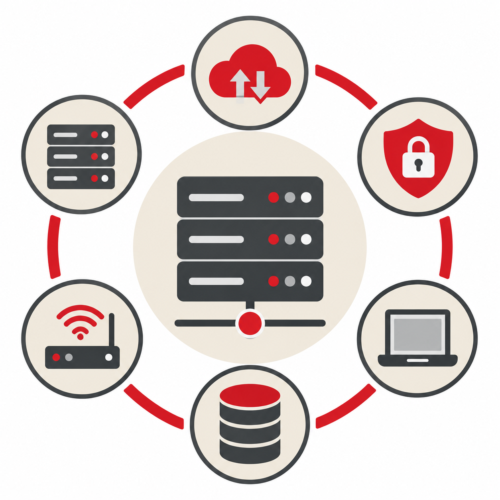
An MSP oversees the technology systems that keep your business running, whether they’re located in your office or hosted in the cloud.
That can include:
- Local Infrastructure: Servers, firewalls, switches, wireless networks, and workstations
- Cloud Infrastructure: Microsoft 365, cloud servers, storage, and business applications
- Security: Endpoint protection, access controls, patches, and security monitoring
- Backups: Data protection, backup monitoring, and recovery planning
- Connectivity: Network performance and secure access between local and cloud systems
The advantage is having someone looking at the entire technology environment rather than managing each piece separately.
1. Unified Infrastructure Management
When local and cloud systems are managed independently, important details can fall through the cracks.
An MSP provides coordinated oversight, helping ensure your infrastructure works together and your technology decisions support your business needs.
2. 24/7 Monitoring
Technology problems don’t always happen during business hours.
Continuous monitoring can identify warning signs such as network interruptions, failing hardware, backup problems, or suspicious activity before they become larger disruptions.
Monitoring doesn’t eliminate every issue, but it helps your IT team identify and respond to problems sooner.
3. Proactive Maintenance
Waiting until something breaks can lead to unnecessary downtime and unexpected expenses.
An MSP helps keep systems healthy through regular maintenance, patch management, performance reviews, and equipment lifecycle planning.
The goal is to address small problems before they become big ones.
4. Stronger Cybersecurity
Protecting a business with both local and cloud systems requires more than installing antivirus software.
An MSP can help coordinate security measures such as multifactor authentication, endpoint protection, firewall management, access controls, and security monitoring.
This layered approach helps reduce gaps between different parts of your technology environment.
5. Cloud Optimization and Cost Control
Cloud services offer flexibility, but costs can increase when subscriptions, licenses, and resources aren’t regularly reviewed.
An MSP helps identify unused licenses, unnecessary services, and opportunities to improve cloud performance.
That means your business can make better use of the technology it’s already paying for.
6. Strategic Technology Planning
Your IT infrastructure should support where your business is headed, not just where it is today.
An MSP can help you plan for equipment replacements, cloud migrations, new employees, additional locations, and changing technology needs.
Instead of making decisions one emergency at a time, you have a roadmap for the future.
Can an MSP Help a Business with Internal IT Staff?
Absolutely.
An MSP doesn’t always need to replace your internal IT team. Through co-managed IT services, an MSP can work alongside existing staff, providing additional expertise, monitoring, security resources, and support.
This allows your internal team to focus on business-specific priorities while the MSP helps manage the broader technology environment.
One Partner for Your Entire IT Infrastructure
Whether your business relies primarily on local servers, cloud applications, or a combination of both, the goal is the same: reliable, secure technology that helps your employees do their jobs.
At IT Radix, we help small and midsize businesses manage their local and cloud infrastructure through proactive monitoring, ongoing maintenance, cybersecurity, and strategic IT planning.
Because managing technology shouldn’t mean juggling multiple systems, vendors, and unexpected problems. It should mean having confidence that your infrastructure is working for your business.