
Quick Answer: IT infrastructure management is the ongoing process of monitoring, maintaining, securing, and optimizing the technology systems that keep a business running. This includes networks, servers, cloud services, computers, firewalls, backups, and other critical IT systems.
Your employees may think of technology as their laptop, email, and the applications they use every day.
Behind those tools, however, is an entire technology infrastructure working to keep everything connected, available, and secure.
Managing that environment is known as IT infrastructure management.
What Is Included in IT Infrastructure?
IT infrastructure includes the technology your employees rely on to access applications, communicate, store information, and get their work done.
Depending on your business, that may include:
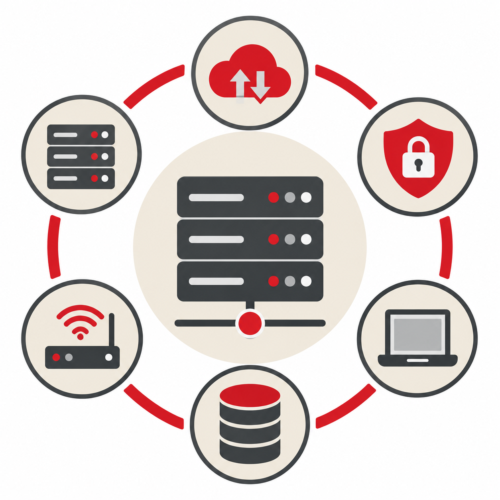
- Servers: Physical or cloud-based systems that host applications, files, and other business resources
- Networks: Switches, wireless access points, Internet connections, and other equipment that keeps everything connected
- Firewalls: Technology that helps protect your network from unauthorized access and cyber threats
- Cloud Services: Microsoft 365, cloud storage, hosted applications, and other online business platforms
- Endpoints: Laptops, desktops, and other devices employees use to access company resources
- Backups: Systems that protect critical information and support recovery after data loss or disruption
- Security Controls: Tools such as endpoint protection, multifactor authentication, monitoring, and patch management
The important thing is that these systems don’t operate independently. They’re connected, and a problem in one area can quickly affect another.
What Does IT Infrastructure Management Involve?
Good infrastructure management isn’t simply fixing technology when it breaks.
It means regularly monitoring and maintaining your environment so problems can be identified early and your technology continues supporting the business.
That can include:
- Monitoring system health and performance
- Installing patches and updates
- Managing network performance
- Reviewing security alerts
- Verifying backups
- Managing cloud services
- Planning hardware replacements
- Identifying capacity and performance needs
In other words, it’s about keeping the technology behind your business healthy, secure, and ready for what’s next.
Why Does IT Infrastructure Management Matter?
Your infrastructure affects almost everything your employees do.
When it’s managed well, it can contribute to:
Productivity: Employees can access the systems and information they need without constant technology interruptions.
Security: Systems stay patched, monitored, and protected against evolving cyber threats.
Reliability: Regular maintenance can help reduce unexpected failures and downtime.
Scalability: Your technology can better support new employees, locations, applications, and business growth.
Business Continuity: Backups, recovery planning, and reliable infrastructure help your business respond when something goes wrong.
Does a Small Business Really Need Infrastructure Management?
Yes. You don’t need hundreds of employees or a large server room to have IT infrastructure.
If your business relies on computers, Microsoft 365, cloud applications, Internet access, cybersecurity tools, or company data, you have infrastructure that needs to be managed.
The environment may be smaller, but its importance to your business isn’t.
Keep the Technology Behind Your Business Working
Most employees shouldn’t have to think about IT infrastructure. They should simply be able to log in and get to work.
Making that happen consistently takes planning, monitoring, maintenance, and security behind the scenes.
At IT Radix, we help businesses manage the technology foundation they depend on every day, keeping infrastructure reliable, secure, and aligned with where the business is headed.
Because when your IT infrastructure works the way it should, your team can focus on doing the same.